

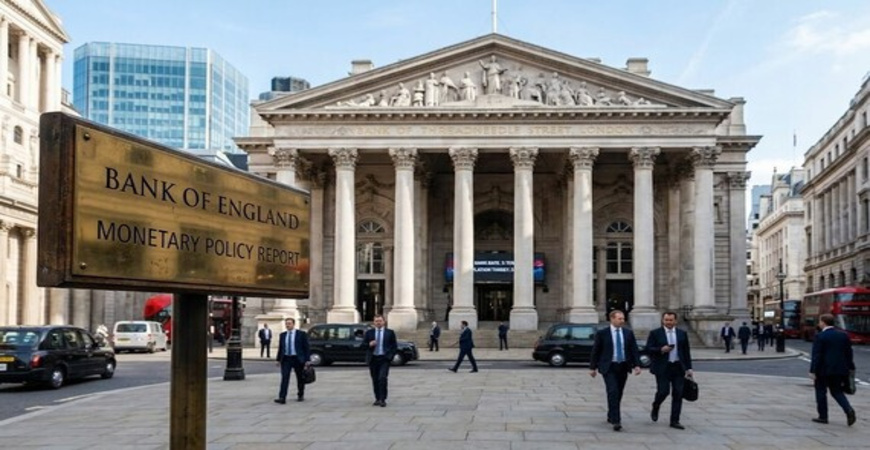

BOE Monetary Policy Report: Interest Rates Held as Inflation Risks Persist
LONDON — The Bank of England (BOE) announced its interest rate decision alongside the release of its highly anticipated BOE Monetary Policy Report today, July 30, 2026. The Monetary Policy Committee (MPC) voted to maintain the benchmark Bank Rate at its current level, adopting a cautious stance as policymakers balance cooling economic growth against stubborn domestic price pressures. While headline inflation has hovered near the central bank’s target, underlying metrics—specifically service sector inflation and wage growth—remain uncomfortably elevated, preventing the central bank from committing to an aggressive easing cycle.
The decision triggered immediate volatility across global financial markets. The British Pound fluctuated sharply against the US Dollar and the Euro, while the FTSE 100 index experienced a mild pullback as investors adjusted their expectations for the trajectory of UK monetary policy. By keeping borrowing costs restrictive, the BOE has signaled that the battle against inflation is not yet fully won, shifting market expectations for the next potential rate cut further into the autumn.
Split Vote Highlights Policymaker Divide
The decision to hold rates was not unanimous, reflecting a growing divide within the MPC regarding the health of the UK economy. A majority of committee members argued that maintaining a restrictive monetary policy stance is essential to ensure that inflation expectations remain anchored. Conversely, a minority bloc advocated for an immediate rate reduction, pointing to signs of economic stagnation and the lagging effects of previous monetary tightening.
Economic Growth and Inflation Forecasts
According to the updated projections in the BOE Monetary Policy Report, the central bank has slightly revised its Gross Domestic Product (GDP) growth forecasts for the remainder of 2026. The UK economy is expected to expand at a sluggish pace, weighed down by high borrowing costs and squeezed household disposable income. On the inflation front, the report suggests that while headline Consumer Price Index (CPI) numbers may see temporary dips, core inflation is projected to remain sticky well into 2027.
Forex: Sterling Responds to Hawkish Hold
In the immediate aftermath of the announcement, the British Pound (GBP) experienced a knee-jerk appreciation against major peers. The decision to hold rates constant, coupled with hawkish undertones in the report, caught some dovish market participants off guard.
-
GBP/USD: The pair tested key resistance levels as yield differentials widened in favor of the Pound, particularly with markets anticipating a more accommodative stance from the US Federal Reserve.
-
EUR/GBP: The Euro weakened against the Pound, breaking below short-term support levels as traders unwound short-Sterling positions.
Equities: FTSE 100 Faces Headwinds
The UK’s benchmark FTSE 100 index faced downward pressure following the publication of the BOE Monetary Policy Report. Higher-for-longer interest rates typically increase borrowing costs for corporations and discount the present value of future cash flows.
Sector-wise, interest-rate-sensitive industries such as homebuilders, real estate investment trusts (REITs), and heavily indebted utilities underperformed. On the other hand, the banking sector found modest support, as sustained high interest rates allow commercial banks to maintain wider net interest margins.
Bonds: Gilt Yields Flatten
In the fixed-income markets, UK government bonds (gilts) saw significant repricing. Short-term gilt yields, which are highly sensitive to monetary policy expectations, ticked upward as traders priced out the probability of a rate cut in the upcoming meeting. The yield curve flattened slightly, reflecting long-term investor concerns over prolonged economic stagnation paired with sticky inflation.
| Asset Class | Immediate Market Impact | Medium-Term Outlook |
|---|---|---|
| GBP/USD | Bullish / Rising | Dependent on Macro Data |
| FTSE 100 | Bearish / Pressure | Range-bound Consolidating |
| 2-Year Gilt | Yields Ticking Higher | Stabilizing at HighsRemove term: Financial Markets F |
The Bullish Scenario for UK Markets
A bullish outcome for UK assets relies on a “soft landing” scenario. If the restrictive stance outlined in the BOE Monetary Policy Report successfully tames service-sector inflation without triggering a severe recession, consumer confidence could rebound. In this environment, the British Pound would likely sustain its strength, and domestic equities would recover as the path toward future, predictable rate cuts becomes clearer.

The Bearish Scenario for UK Markets
Conversely, the bearish risk involves stagflation. If service inflation remains entrenched while high interest rates push the unemployment rate upward and suppress GDP growth, the BOE will find itself in a policy corner. Prolonged high rates could exacerbate corporate insolvencies and mortgage defaults, leading to a sharp sell-off in UK equities and an eventual depreciation of Sterling as growth prospects deteriorate.
Historical Context and Central Bank Divergence
The current policy path of the Bank of England mirrors the challenges faced during previous inflationary cycles, such as the supply-side shocks of the late 1970s and early 1980s, where premature easing led to secondary waves of inflation. By exercising restraint, the MPC aims to avoid repeating historical missteps.
Furthermore, the BOE’s cautious approach highlights a growing divergence among major central banks. While some global monetary authorities have initiated clear easing cycles due to rapidly cooling economies, the UK’s unique structural labor shortages and wage dynamics have forced the BOE to move at a much slower pace. This divergence is expected to remain a primary driver of macro trends in global financial markets over the coming quarters.
Conclusion and Market Outlook
The July 2026 BOE Monetary Policy Report underscores a central bank committed to data dependency and cautious deliberation. By maintaining the benchmark rate, the MPC has prioritized long-term price stability over short-term economic relief. For investors and traders, this means navigating an environment characterized by prolonged restrictive credit conditions, localized equity volatility, and a resilient but highly sensitive British Pound. Market participants will now closely scrutinize upcoming labor market data and services CPI releases to gauge whether the bank will maintain this restrictive stance heading into the final quarter of the year.


