

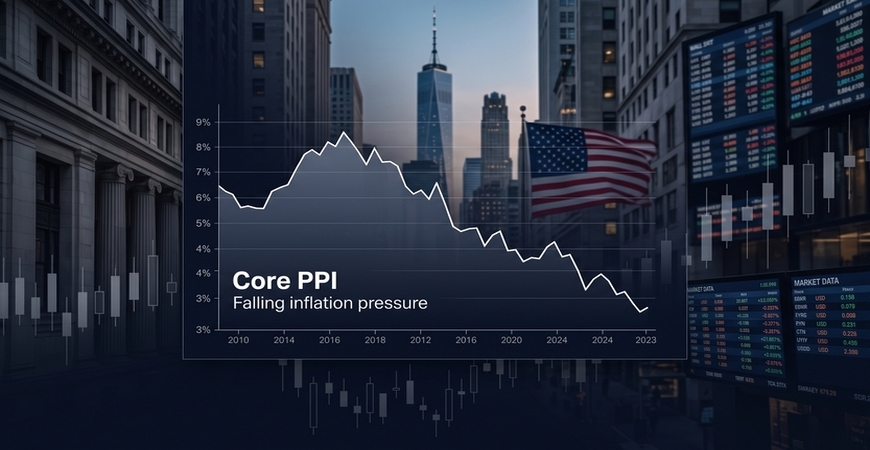

US Core PPI Comes in Below Expectations at 0.2% in August
U.S. producer price inflation increased at a slower pace than expected in August, with the US Core PPI rising 0.2% month-over-month, according to data released Thursday. The figure came in below the 0.3% market forecast, while the previous reading was also 0.3%.
The softer-than-expected increase in core producer prices offered a modestly positive signal on underlying inflation pressures and could influence expectations surrounding the Federal Reserve’s monetary policy outlook.
US Core PPI Data: August
The latest figures show that core producer inflation moderated compared with market expectations, although headline PPI accelerated during the month.
| US PPI Indicator | Actual | Forecast | Previous |
|---|---|---|---|
| Core PPI m/m | 0.2% | 0.3% | 0.3% |
| PPI m/m | 0.4% | 0.4% | 0.1% |
The 0.2% Core PPI reading represents a 0.1 percentage-point miss against expectations. The data suggest that underlying price pressures at the producer level were somewhat weaker than economists had anticipated.
However, the headline PPI figure increased 0.4% month-over-month, matching expectations but rising significantly from July’s 0.1% increase. The divergence between the core and headline measures means investors are likely to look beyond the headline number when assessing the broader inflation trend.
What Does the US Core PPI Report Mean for the Federal Reserve?
The Core PPI is closely monitored because changes in producer prices can provide an early indication of inflationary pressures that may eventually reach consumers.
A weaker-than-expected reading can generally be viewed as dovish for the Federal Reserve, as lower producer-price pressures may reduce concerns about persistent inflation. This could give policymakers greater flexibility if economic conditions warrant a less restrictive monetary policy stance.
At the same time, the latest report does not provide enough evidence on its own to determine the Fed’s next move. Recent labor-market data and upcoming consumer inflation figures remain important factors in determining the direction of U.S. monetary policy.
US Dollar and Gold Market Reaction
The softer Core PPI reading could put some downward pressure on the U.S. dollar if traders interpret the data as a sign of easing inflation.
Lower inflation expectations can also weigh on Treasury yields, which may support gold and other assets that tend to benefit from lower interest-rate expectations.
However, the market reaction is likely to depend heavily on the upcoming U.S. Consumer Price Index (CPI) report. If CPI also shows signs of cooling, expectations for a more accommodative Federal Reserve could strengthen.
On the other hand, a stronger-than-expected CPI reading could offset the dovish impact of the Core PPI report and provide renewed support for the dollar.
Markets Turn Their Attention to US CPI
The latest PPI figures are particularly important because they come ahead of the next major U.S. inflation release. Traders will be watching the core CPI closely for confirmation of whether inflationary pressures are continuing to moderate.
The key scenario for financial markets is straightforward: a combination of weaker Core PPI and weaker-than-expected CPI could increase expectations for lower interest rates and potentially support gold and major currency pairs against the U.S. dollar.
Conversely, stronger consumer inflation could reinforce expectations that the Federal Reserve will need to maintain a restrictive policy stance for longer.
For now, the August Core PPI report provides a moderately encouraging signal on underlying producer inflation, but it is unlikely to change the Federal Reserve outlook by itself. Investors will continue to assess incoming inflation, employment and economic-growth data before making stronger conclusions about the next policy move.
Key Takeaways
- US Core PPI rose 0.2% m/m in August.
- The reading was below the 0.3% market forecast.
- The previous Core PPI reading stood at 0.3%.
- Headline PPI increased 0.4% m/m, compared with 0.1% in July.
- A softer Core PPI can be dovish for the U.S. dollar.
- Gold could benefit if lower inflation leads to lower interest-rate expectations.
- The upcoming US CPI report remains a key event for markets and Federal Reserve expectations.
Frequently Asked Questions
What was the US Core PPI in August?
US Core PPI increased 0.2% month-over-month in August, below the 0.3% market forecast.
Was US Core PPI higher or lower than expected?
The Core PPI was lower than expected, coming in at 0.2% versus the 0.3% forecast.
How does Core PPI affect the US dollar?
A weaker-than-expected Core PPI can put pressure on the U.S. dollar because it may reduce expectations for persistent inflation and restrictive Federal Reserve policy. The actual market reaction also depends on other economic data.
Is lower Core PPI positive for gold?
A softer Core PPI can be supportive for gold if it leads markets to expect lower interest rates or lower Treasury yields. However, gold prices can also be influenced by real yields, the U.S. dollar, geopolitical risks and broader market sentiment.
What is the next important US inflation report?
The next major inflation release for traders is the U.S. Consumer Price Index (CPI), particularly the core CPI measure, which excludes food and energy prices.
Disclaimer: This article is for informational purposes only and does not constitute investment advice or a recommendation to trade any financial instrument.


